People often ask me why.
Why insects.
Why tiny frogs.
Why creatures that most people overlook, ignore, or even fear.
In a world full of vast landscapes, dramatic wildlife, and iconic species, why choose to focus on something so small?
The answer is not simple.
But it begins here:
Because the small world is where I learned how to truly see.
Learning to Look Down
We are taught, in many ways, to look up and out.
To seek what is big, impressive, undeniable.
The animals that fill documentaries. The places that take our breath away instantly.
But the forest — the real forest — does not only live in those moments.
It lives under leaves.
Along the edge of a branch.
In the space between what we consider important.
The first time I truly slowed down and looked closely, everything changed.
What once felt like empty space became full.
What once felt insignificant became complex, intentional, alive.
It wasn’t that the small world appeared.
It had always been there.
I had just never learned how to see it.
The Unnoticed Majority
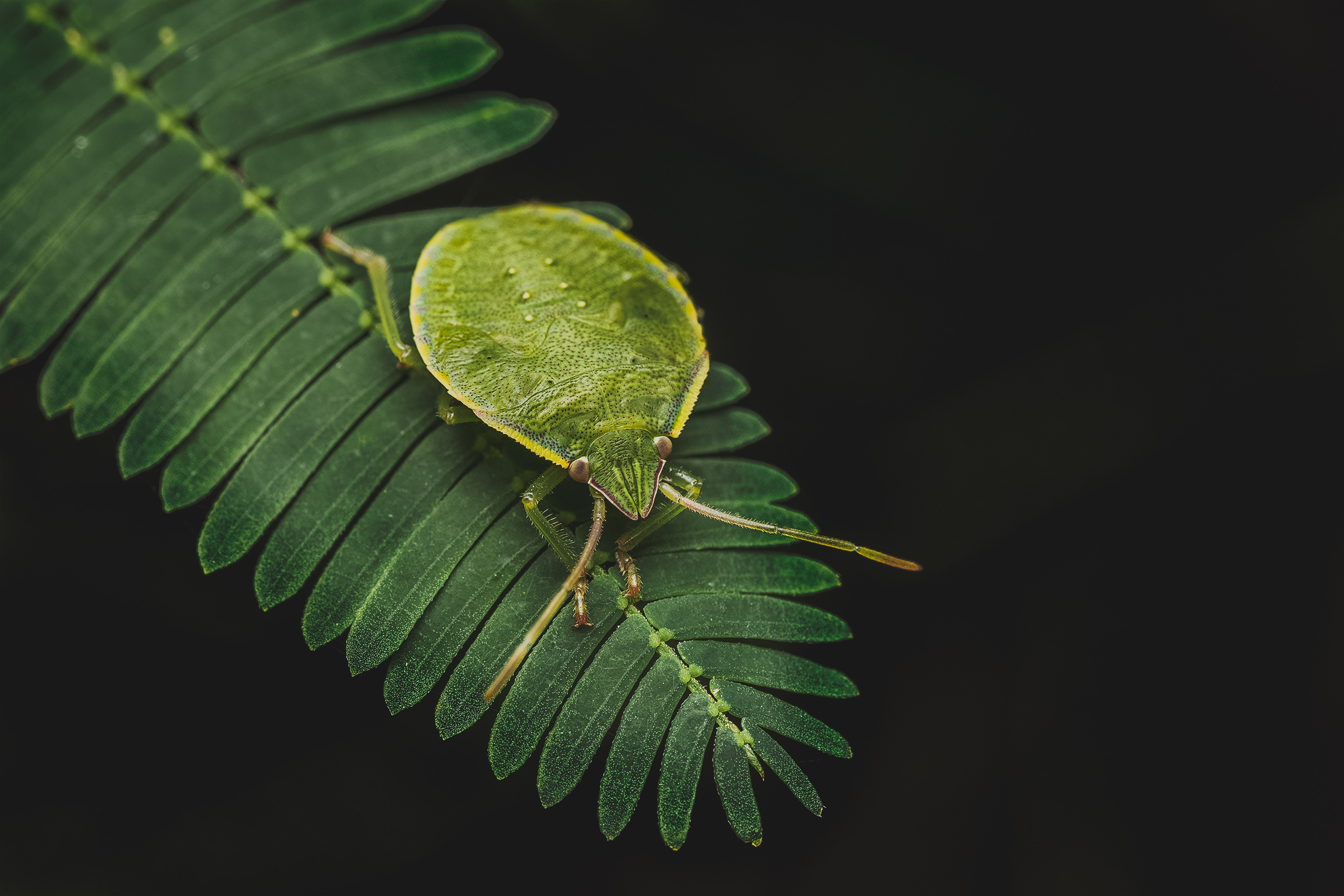
Most of life on Earth is small.
Insects, arachnids, fungi, microorganisms — they are not the exception. They are the foundation.
They pollinate.
They decompose.
They recycle nutrients, build soil, regulate populations, sustain entire ecosystems.
And yet, they are rarely the focus of attention, protection, or admiration.
We are drawn to what resembles us.
To eyes we can recognize.
To stories we already understand.
But life does not organize itself around human preference.
By photographing the small world, I am not just choosing a subject.
I am choosing to shift perspective — my own, and hopefully, others’.
Beauty Beyond Preference
Many of the creatures I photograph are not considered “beautiful” in a conventional sense.
They are strange.
Angular.
Textured in ways that feel unfamiliar.
Some carry patterns that resemble decay. Others mimic things we instinctively avoid.
But when you spend time with them — real time, not a passing glance — something begins to change.
Beauty expands.
It becomes less about symmetry or color, and more about function, adaptation, and presence.
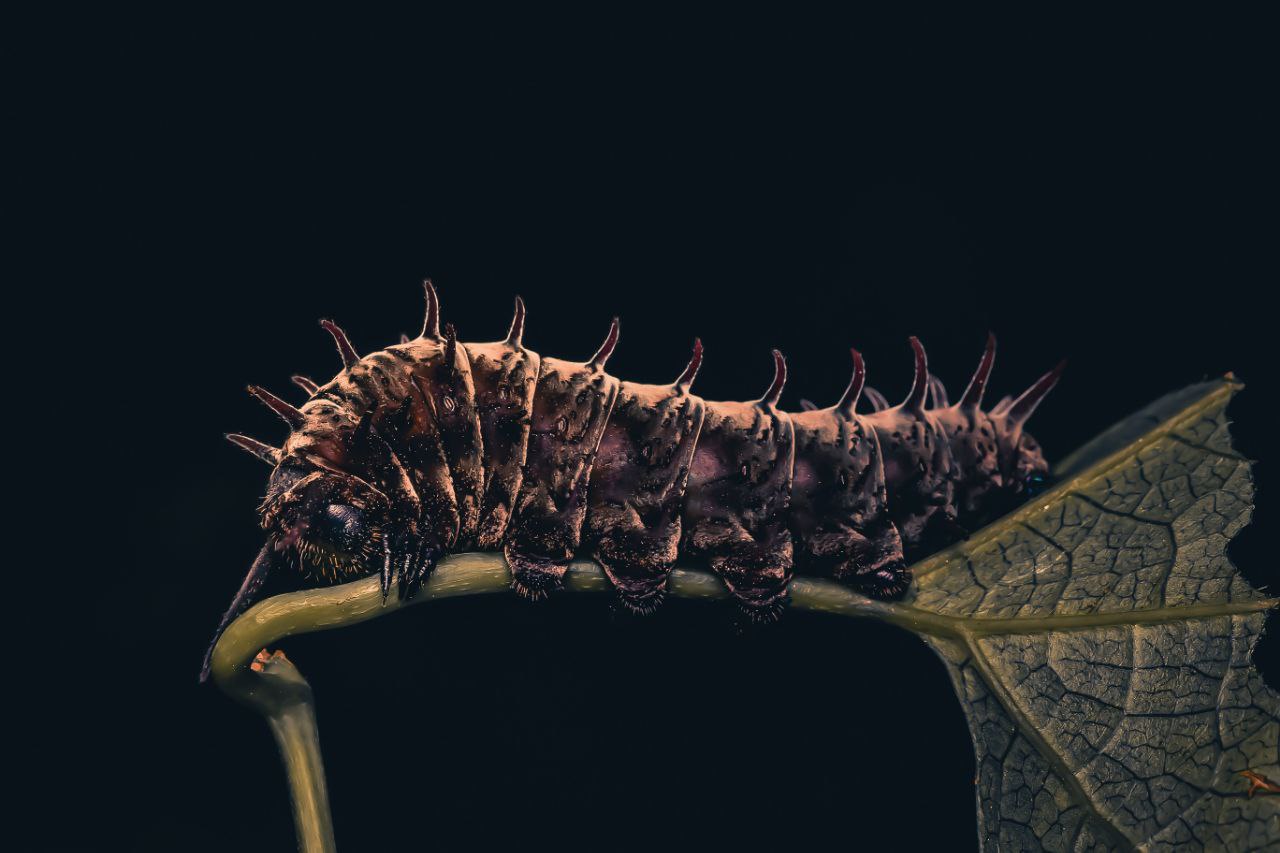
A camouflage pattern becomes a story.
A compound eye becomes a universe.
A tiny movement becomes a decision shaped by millions of years of evolution.
What once felt distant becomes intimate.
Intimacy Changes Everything
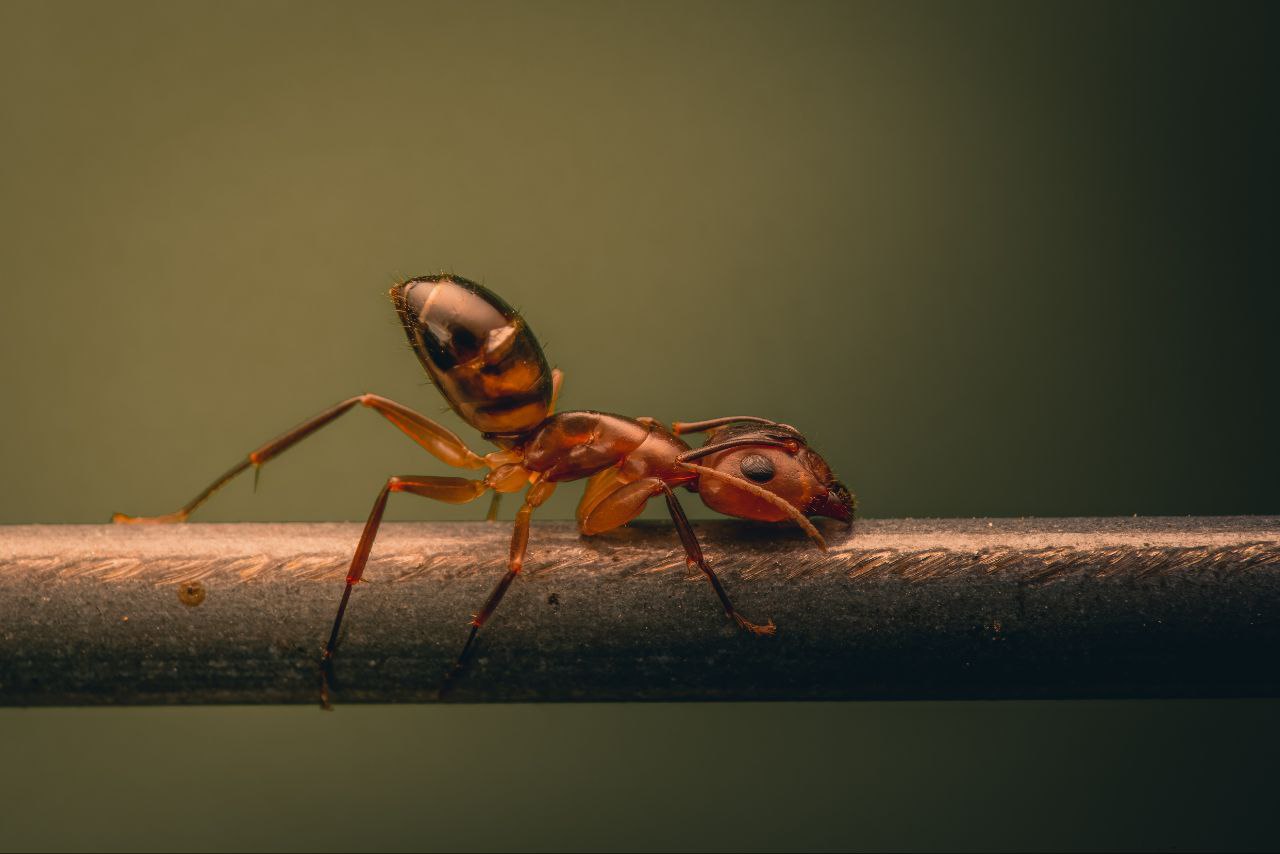
Macro photography is, at its core, an act of intimacy.
You move closer.
You adjust your breath.
You enter a space that is not yours.
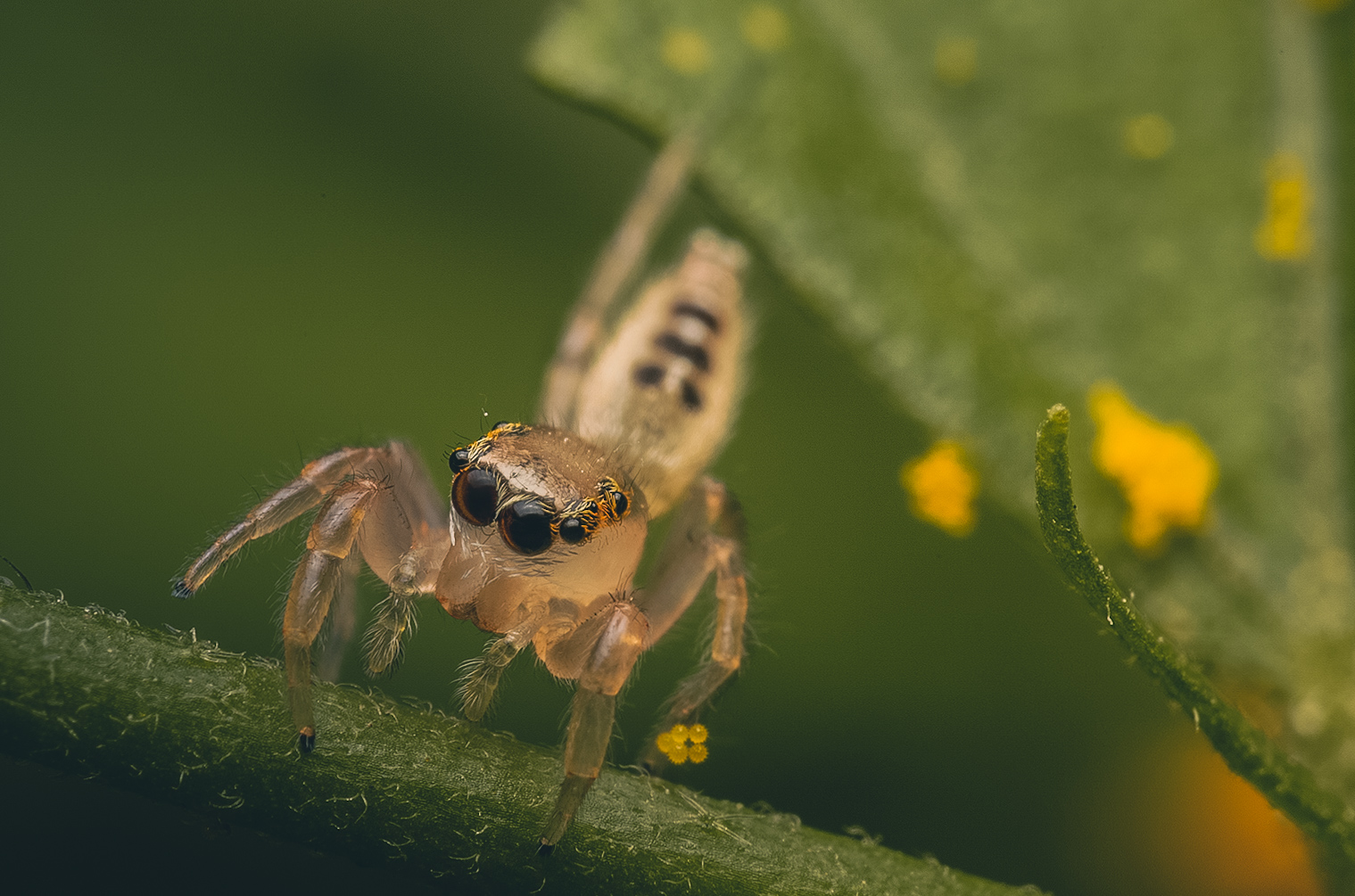
And in doing so, you begin to notice details that are otherwise invisible — the fine hairs on a leg, the subtle shift of light across a wing, the tension in a body that is aware of your presence.
This closeness creates something powerful: connection.
It is much harder to dismiss a creature once you have truly seen it.
Not glanced at it. Not labeled it.
But seen it.
A Different Kind of Storytelling
When I photograph small beings, I am not just documenting them.
I am telling a different kind of story.
One where the main characters are not the obvious ones.
Where survival is quiet, constant, and often invisible.
Where importance is not determined by size or popularity.
These images are an invitation.
To pause.
To reconsider.
To enter a world that exists alongside us, but rarely within our awareness.
Resistance in a Big World
There is also something else — something more subtle.
In a world that constantly pushes us toward bigger, faster, louder… choosing to focus on the small feels, in its own way, like resistance.
It is a refusal to overlook.
A decision to value what is easily dismissed.
It asks for patience in a culture of immediacy.
Attention in a culture of distraction.
And that is not always easy.
But it is necessary.
Because They Matter
At the end of it all, the reason is both simple and profound:
I photograph small things because they matter.
Not as background.
Not as supporting roles in a larger story.
But as essential, complex, irreplaceable lives.
Lives that hold ecosystems together.
Lives that carry strategies, histories, and relationships we are only beginning to understand.
And lives that, if we never learn to see them, we may lose without ever realizing they were there.
An Invitation
If there is something I hope my work can do, it is this:
To gently shift the way we look at the world.
To bring attention to what is already here.
To create space for curiosity where there was once indifference.
You don’t need special equipment.
You don’t need to travel far.
You only need to slow down…
and look a little closer.
Because once you do, the world expands — not outward, but inward.
And it is far more vast than it first appears.

Cynthia, This is one of the best articles about the “why” of macro photography I have ever read. You have certainly helped my motivation to do more macro work.. Thank you. Bill