If you ever held a CD under the light and tilted it slowly, you probably remember what happened. The silvery surface suddenly came alive with bands of blue, green, violet, and gold. The colors shifted as you moved your hand, appearing and disappearing with every small change in angle.
For younger generations, a CD might already be an unfamiliar object. But the phenomenon it revealed is still all around us. We see it in soap bubbles, in the iridescent sheen of beetles, and in the wings of certain butterflies. Nature has been producing these shifting colors long before we invented the objects that helped us notice them.
What makes these colors so fascinating is that they don’t always come from pigments. Sometimes, color emerges from the physical structure of a surface and the way it interacts with light.
When Structure Becomes Color
We tend to think of color as something an object possesses. A leaf is green, a flower is red, and a beetle might be metallic blue. Often, these colors come from pigments: substances that absorb certain wavelengths of light and reflect others. Chlorophyll, for example, absorbs light strongly in the red and blue regions of the spectrum, reflecting more green light.
But nature has another way of creating color.
In structural coloration, microscopic structures interact with light through processes such as scattering, diffraction, and interference. Their size, shape, and arrangement influence which wavelengths reach our eyes. The result can be an intense blue, a brilliant green, or a metallic rainbow that shifts with the viewing angle.
The back of a CD offers a familiar demonstration. Its closely spaced tracks diffract white light, separating it into different colors. The mechanism is not identical to that found in every iridescent animal, but the CD gives us an intuitive way to understand how a surface can produce colors without simply being coated in colored pigment.
And once we recognize this possibility, some of the most striking colors in nature become even more intriguing.
A Beetle That Seems to Carry Its Own Light
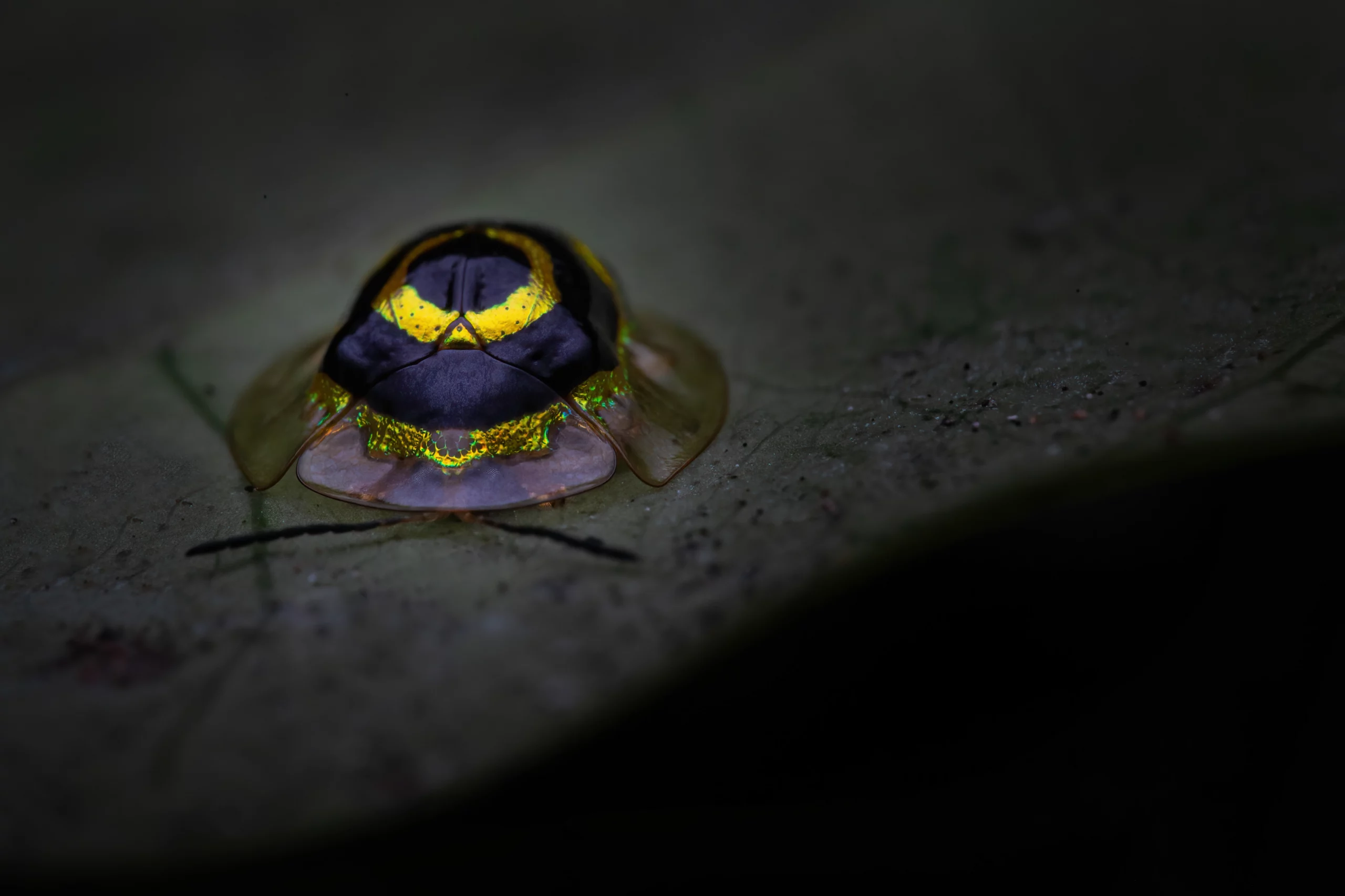
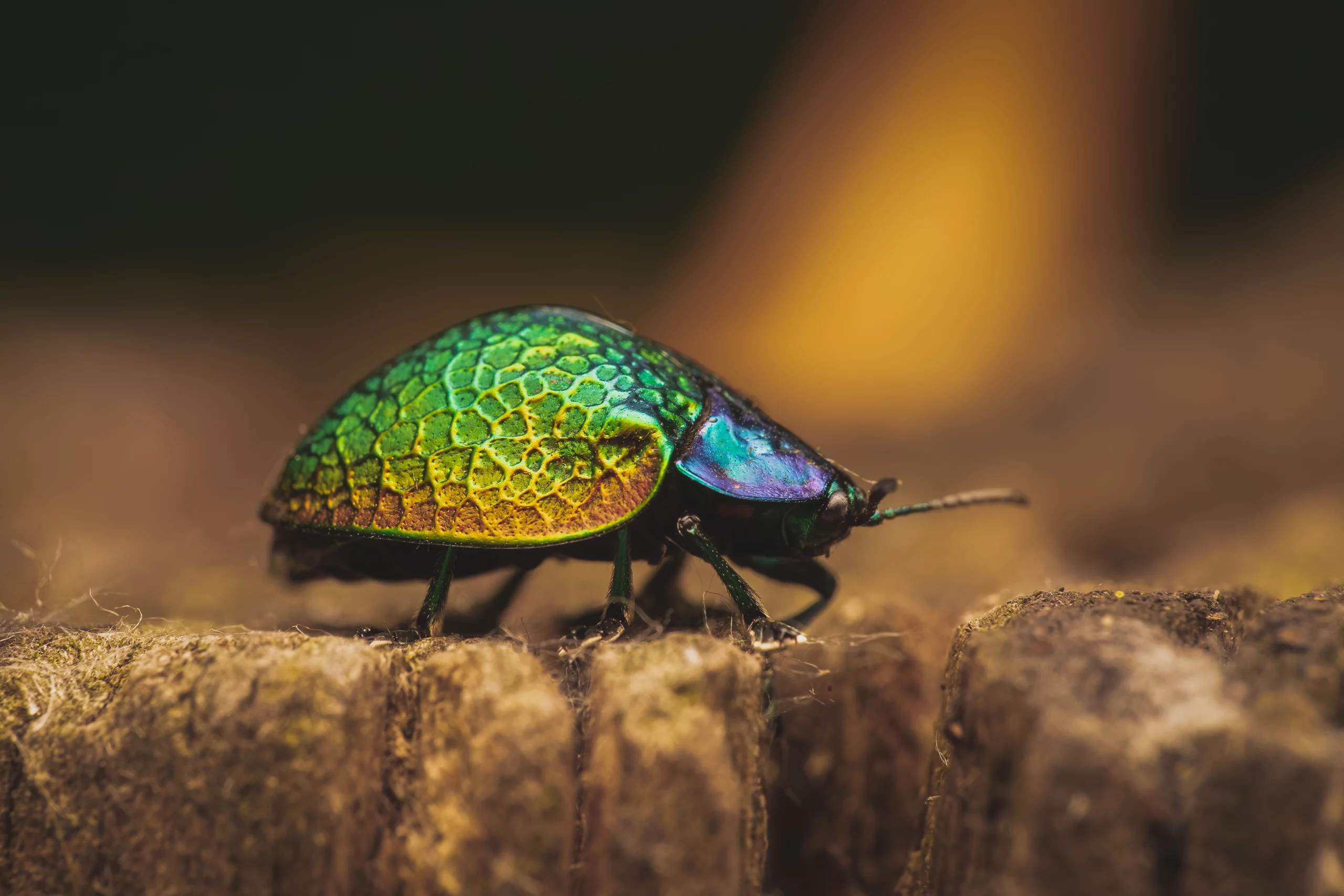
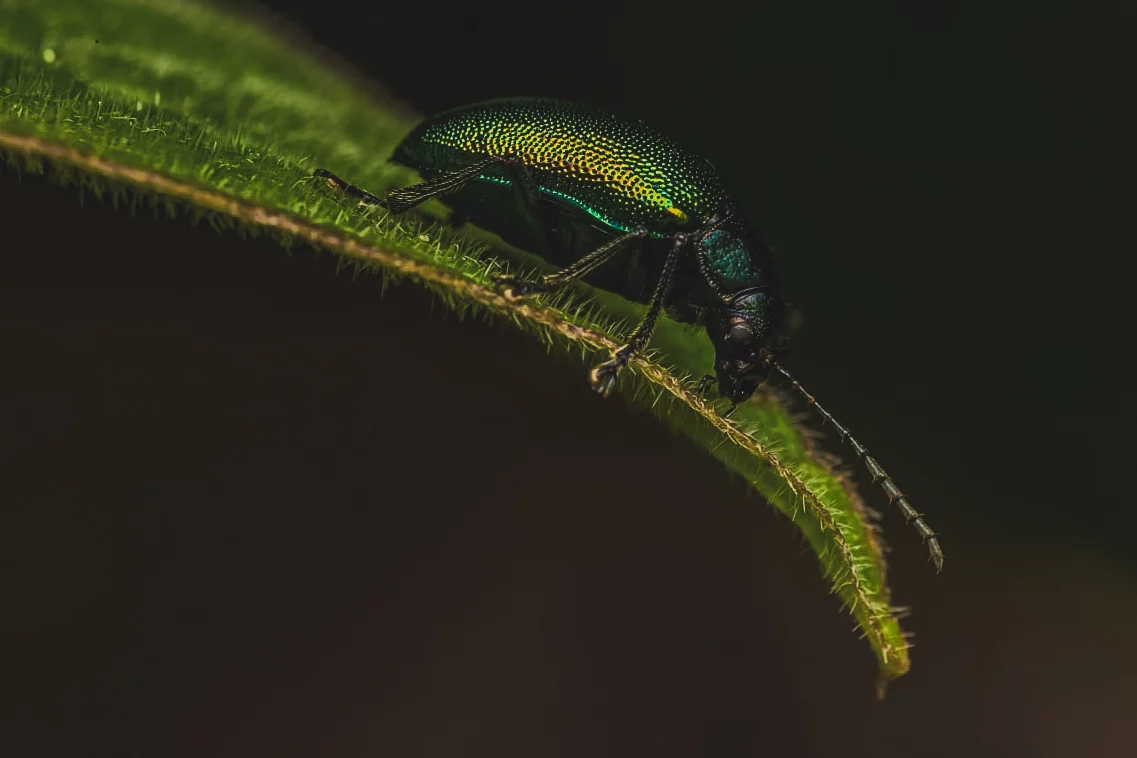
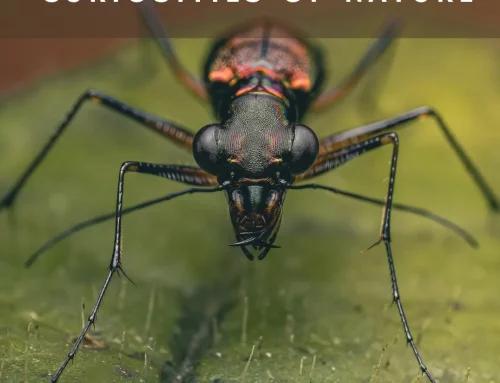
I’ve always been drawn to the metallic colors of beetles. Some appear deep blue or emerald green; others flash with copper, gold, or violet. Their surfaces can look almost polished, as if someone had carefully coated them with a thin layer of metal.
In many iridescent beetles, microscopic structures in the outer layers of the body reflect light in ways that produce these brilliant hues. Depending on the species, pigments may contribute as well, so the color we see can result from a combination of mechanisms.
These colors are more than a visual curiosity. Structural coloration can play a role in communication, mate recognition, camouflage, and other interactions with the environment, although its function varies among species and is not always fully understood.
Nature doesn’t produce these colors for our admiration. We happen to be able to admire them.
The Hidden Architecture of a Butterfly Wing
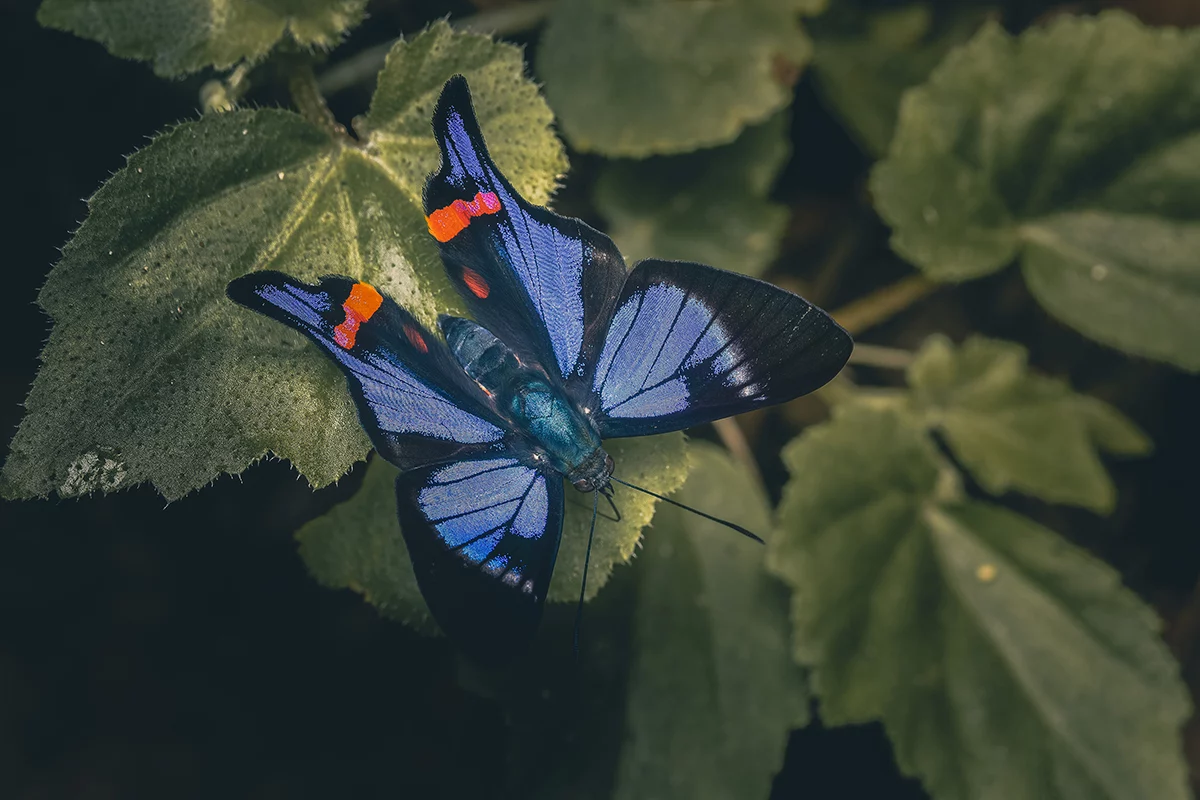
Butterfly wings offer another remarkable example. Their colors can seem almost impossibly vivid, particularly when blue or green stands out against a darker background.
In many butterflies, microscopic structures within the wing scales interact with light to produce structural colors. These scales may contain intricate ridges and layers arranged at scales far smaller than we can see with the naked eye. In some species, pigments contribute to the final appearance too, creating colors through a combination of physical structure and chemistry.
A butterfly wing, then, is not simply a surface painted with color. It is a complex arrangement of tiny structures, each contributing to the way light behaves.
And not every blue butterfly gets its color in the same way. Similar appearances can arise from different physical and chemical processes. The color alone doesn’t tell us the whole story.
That’s one of the pleasures of studying nature: the closer we look, the more complicated—and interesting—the explanations become.
The World Is Full of Colors We Already Know
We don’t need to travel to a rainforest or examine an insect under a microscope to encounter these optical phenomena. A soap bubble displays shifting colors through interference in a thin film of liquid. A CD separates white light through diffraction. Reflective road markings and safety materials use other optical principles to make themselves visible under particular lighting conditions.
These examples don’t all work in the same way, but they reveal something we easily overlook: the appearance of an object depends partly on how light interacts with it.
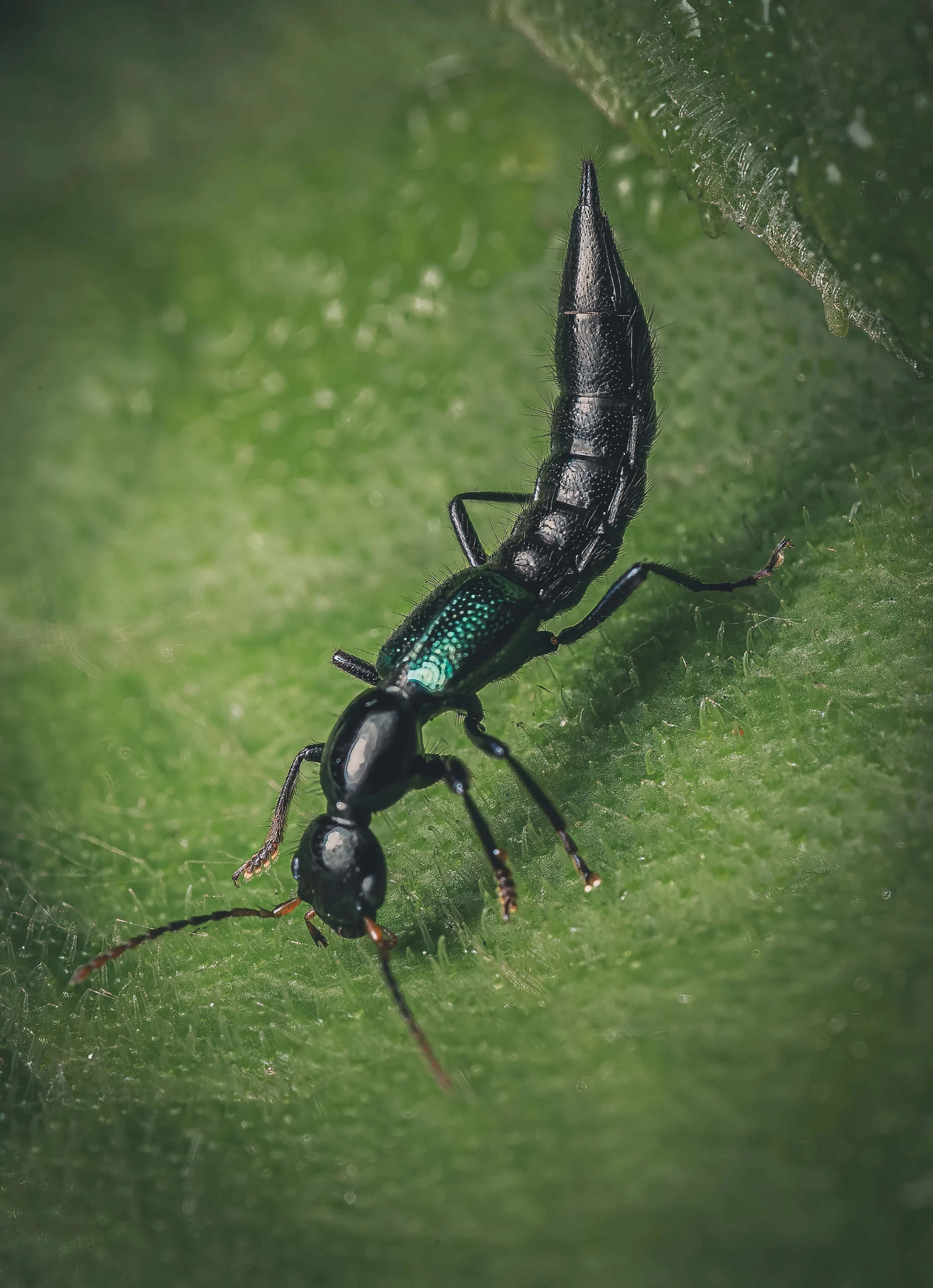
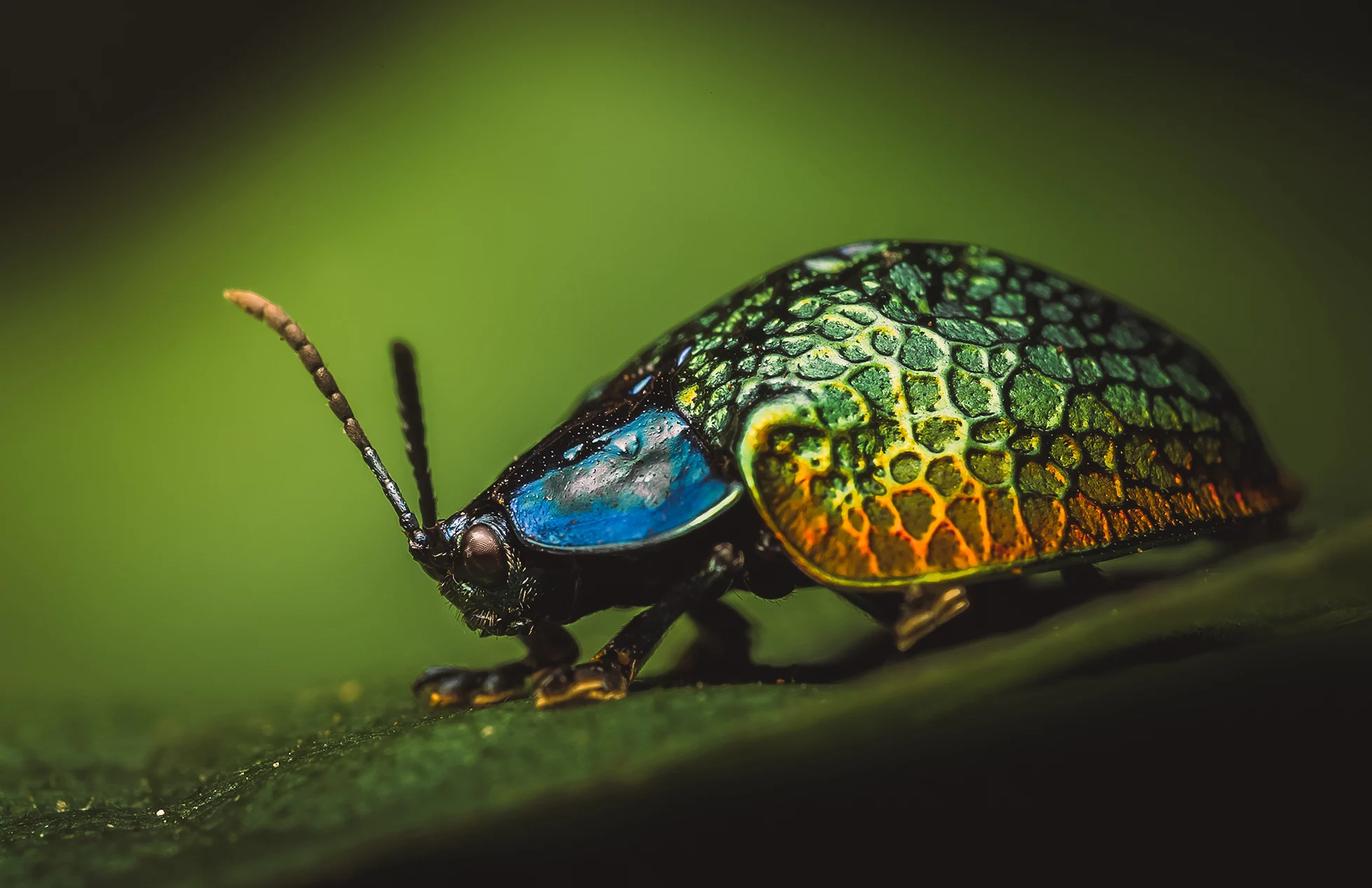
I think about this when I photograph insects. With an iridescent beetle, a small change in the direction of the light or the angle of the camera can transform the colors that appear in the image. What looked dark a moment ago might suddenly flash green or violet.
As photographers, we make decisions about which version of that moment to record. The light, the angle, and the position from which we observe the subject all influence the image we create.
The beetle is the same, but the photograph can tell a very different story.
Seeing Is a Relationship
Structural color challenges a familiar assumption: that the world looks the way it does simply because objects possess the qualities we see.
The microscopic structures responsible for these colors are real, measurable features of an animal’s body. But the colors revealed to us depend on the light and the conditions under which we observe them. What we perceive is the result of an interaction, not just an isolated property of the object.
I think there is something quietly familiar about that.
In everyday life, we often form impressions of people, places, and situations based on what we can see from where we stand. We forget that our perspective is shaped by our experiences, our expectations, and the details we happen to notice. A different point of view may reveal something we had overlooked—not because the thing itself has changed, but because we can finally see another part of it.
The next time you see a beetle flashing green or blue in the light, remember that you may be witnessing the work of microscopic architecture, structures interacting with light on a scale your eyes cannot resolve.
And if you ever find an old CD in a drawer, tilt it toward a window and watch the colors move. For a moment, you’ll be looking at the same fascinating world of optics that helps make beetles shimmer and butterfly wings shine.
One example came from human invention, the others from evolution. Yet all of them remind us that the world is full of phenomena connecting our everyday lives with the extraordinary complexity of nature.
Sometimes, we only need to look a little closer to recognize the connection.


Leave A Comment