
There is a difference between visiting a place and living in it.
When we travel somewhere new, we tend to experience it through a particular kind of attention. Everything feels heightened. We notice the colors, the sounds, the light falling through the trees. We take photographs of things we might walk past without a second glance at home. Even the smallest details seem to carry a little magic simply because we are somewhere unfamiliar.
For a while, the world feels full of discoveries.
I think about this sometimes when I look at the life I have built in Costa Rica. When I first came here, the landscape was an invitation. The ocean, the forest, the wildlife, the slower rhythm of a small town by the beach — all of it represented a different way of living, one that felt closer to the things I had always valued.
Eventually, I made the decision to stay.
And staying changes things.
The beach becomes a place you can reach by bicycle rather than a destination for the day. The sounds of the forest become the background to your morning instead of something you pause to listen to. Rain is no longer simply part of the tropical experience; sometimes it changes your plans, your work, or the shape of an entire day.
The extraordinary becomes ordinary.
But I have come to realize that this is not necessarily a loss. It is simply another way of knowing a place.
When we are visitors, we tend to see what stands out. We notice the landscape, the architecture, the food, the customs that seem different from our own. We experience a place through the things it reveals to us, often the things that make it interesting or beautiful from the outside.
But there is so much more beneath that visible layer.
When we stay long enough, we begin to understand that a place is not only its landscape or its most recognizable traditions. It is also the way people relate to one another, the unwritten rules that shape everyday interactions, the local expressions and habits, the things everyone seems to know without ever needing to explain them. It is the way decisions are made, how people organize their time, what matters to a community, and how relationships develop.

Beyond the landscape
When we stay long enough, we begin to notice the things that rarely make it into travel photographs. The unwritten rules that shape everyday interactions. The ways people communicate, organize their time, make decisions, build relationships, and understand their responsibilities toward one another.
These things are not usually part of the experience of a visitor. They take time to notice, and even longer to understand.
There is also a difference between being welcomed as a visitor and trying to find a place within the everyday life of a community.
As visitors, we often encounter a place through the services, experiences, and interactions designed around tourism. We are there temporarily. We arrive with expectations, spend time and money, enjoy what the place has to offer, and eventually leave. The relationship is relatively simple.
But when we begin trying to build a life somewhere, the relationship changes. We are no longer just observing the local culture; we are participating in it, or at least trying to find a way to do so.
We encounter its social and economic realities more directly. We have to navigate work, agreements, practical arrangements, communication, and the everyday exchanges that make a community function. And it is often here that cultural differences become much more tangible.
Something that seems straightforward to us may be understood quite differently by someone who grew up within another set of social conventions. Expectations around time, commitment, communication, planning, or the way an agreement is understood can vary considerably.
Sometimes these differences are interesting. Sometimes they require patience and adaptation. And sometimes they can be frustrating.
I don’t think understanding another culture means agreeing with everything we encounter, or that adapting means abandoning our own ways of doing things. It means recognizing that our own perspective is not universal, while also acknowledging that not every difference is easy to navigate.
We can appreciate a place and still find parts of its social reality difficult to understand. We can respect different ways of living without necessarily feeling comfortable with all of them.
Perhaps this is one of the more complicated stages of getting to know somewhere: realizing that loving its landscape and enjoying its beauty are not the same as understanding the society that exists within it.
The layers that familiarity reveals
Little by little, we begin to recognize patterns that were invisible to us at first. We learn that what seemed unusual may have its own logic, shaped by a different history, a different set of priorities, or simply another way of understanding the world.
We also discover that our first impressions were incomplete.
A place is not only its most recognizable traditions or the qualities that make it attractive to outsiders. It is shaped by people, histories, economic circumstances, social relationships, and countless everyday decisions. Some of these layers are visible immediately. Others only become apparent when we spend enough time there to experience their consequences.
And not everything becomes more beautiful with familiarity.
Some things lose their novelty. Other realities emerge, the ones that are harder to see when we are only passing through. The everyday demands of making a living, navigating relationships, understanding local dynamics, and finding ways to participate in a community are part of the experience too.
The landscape remains beautiful, but it cannot tell us everything about the place.
I think this is one of the quiet differences between dreaming about somewhere and actually getting to know it. From a distance, we tend to imagine a place as a whole. We picture the sunsets, the freedom, the adventures, the moments that make us feel certain we have found somewhere special.
Living somewhere means discovering its many parts, including those we never imagined when we first arrived.

Learning to look again
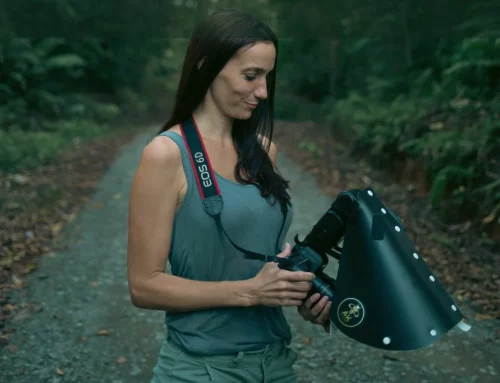
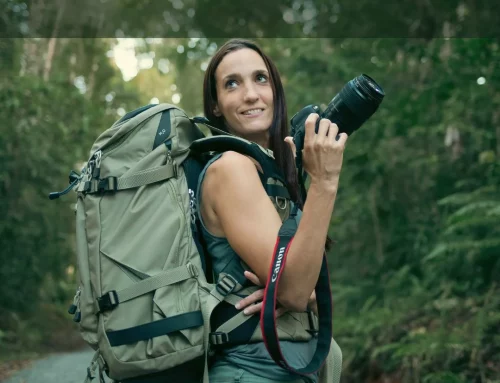
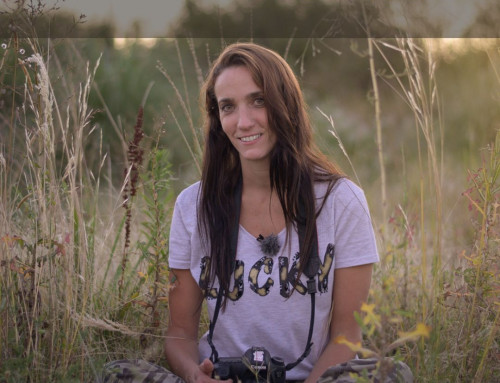
As a naturalist and photographer, I have spent much of my life learning to pay attention to things that are easy to overlook. In nature, familiarity can be deceptive. A path we have walked a hundred times can reveal something new if we change our pace, the direction of our gaze, or the time of day we choose to explore it.
The same place can offer a different world to someone who has learned how to look.
Perhaps living somewhere long enough asks something similar of us. We have to move beyond our first impressions, beyond the things that initially attracted us, and become attentive to what is less obvious. We begin to understand a place not as a collection of beautiful scenes, but as a living network of relationships, histories, habits, and daily experiences.
And that process requires more than observation. It asks for curiosity, patience, and a willingness to question our own assumptions. It also requires accepting that understanding does not always lead to agreement, and that some differences may remain difficult even after we have learned where they come from.
I find this particularly interesting because it resembles the process of studying nature. The more we learn about an organism or an ecological relationship, the more complicated the picture often becomes. What initially seemed simple reveals layers of interactions, dependencies, adaptations, and histories. Understanding does not make the subject less fascinating. It makes us aware of how much we had not seen.
Perhaps the same is true of places.
Knowing a place is an ongoing process
I don’t think staying long enough necessarily gives us all the answers. It may simply give us a different set of questions. It reveals things about a place that we couldn’t have known beforehand, but also things about ourselves: the expectations we carry, the habits we take for granted, and the assumptions we rarely question until we encounter another way of doing things.
Over time, our relationship with a place becomes less dependent on the excitement of discovery. We begin to recognize its rhythms, its contradictions, and the many different realities that coexist within it.
I still want to go deeper into the forest. I still want to notice the small lives unfolding around me, to make photographs that express what I see and understand. I still want to keep discovering the place where I live.
But I have come to understand that discovery is not always about finding something beautiful or surprising. Sometimes it means becoming aware of something that challenges our expectations. Sometimes it means recognizing a pattern we hadn’t noticed before, or realizing that the way we interpreted an interaction was shaped more by our own cultural references than by the reality in front of us.
And perhaps that is part of what it means to know a place more deeply.
We begin by seeing what makes it different. Then, gradually, we discover the things that make it what it is: not only its landscapes and traditions, but also its everyday relationships, its social structures, its tensions, and the many ways people experience life there.
A place is never just what we see when we arrive. It is everything that unfolds beneath that first impression.
And the longer we stay, the more we realize that knowing somewhere is not a destination we eventually reach. It is an ongoing process of looking again, questioning what we thought we understood, and allowing the complexity of a place to become part of our experience of it.
Perhaps that is one of the things that change when we stay long enough: we stop seeing a place only through what we came looking for, and begin to encounter it on its own terms.



Leave A Comment