
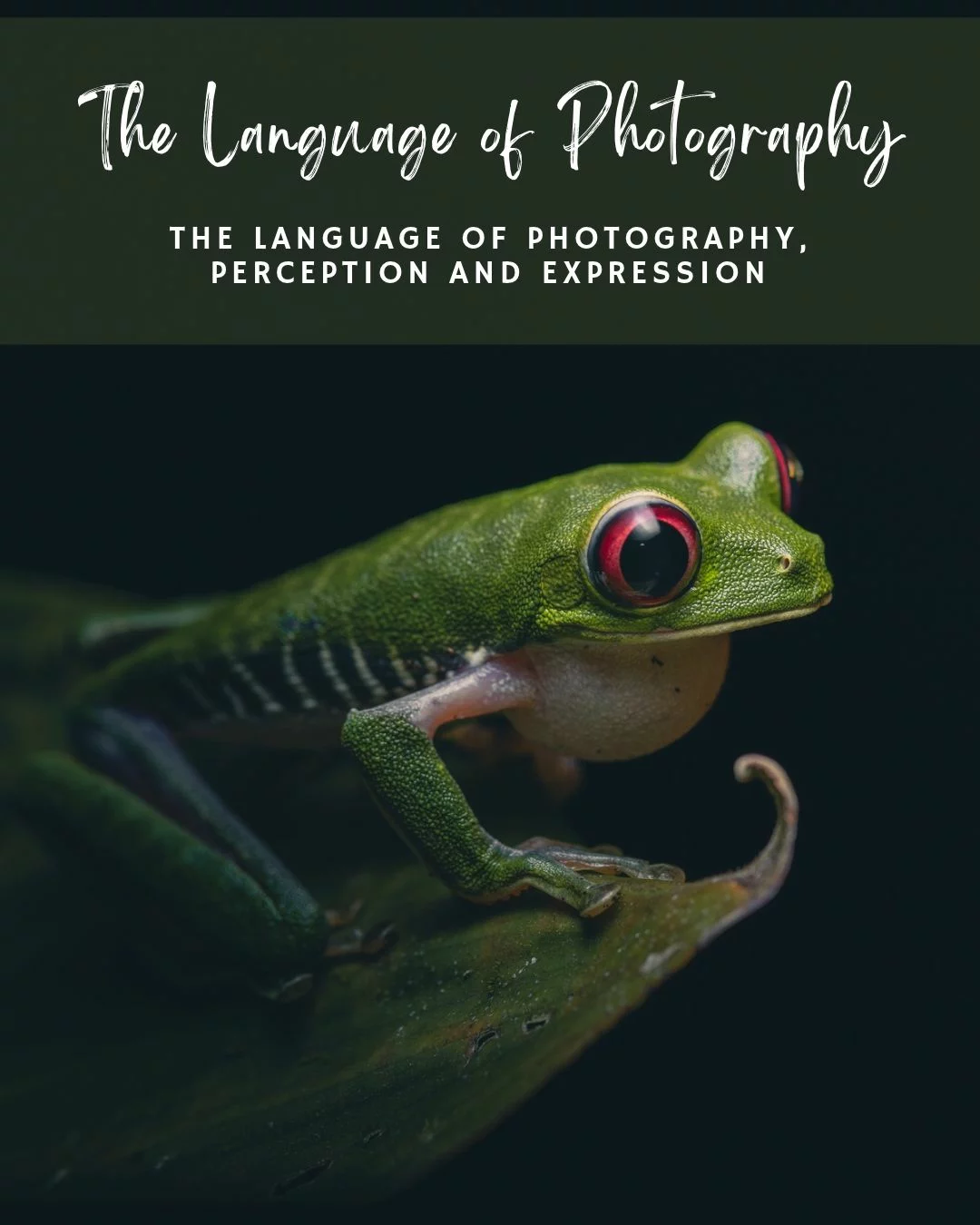
A photograph can show us a moment.
It can show us a creature, a gesture, a landscape, a particular arrangement of light and color. It can freeze something that existed for only a fraction of a second and make it available to someone who was not there.
But every photograph also leaves something out.
No matter how carefully we compose an image, there will always be a world beyond its edges.
A photograph cannot show the hours spent looking for the subject.
It cannot show the rain, the mud, the mosquitoes, the sounds of the forest, or the feeling of standing in darkness with nothing but a small beam of light revealing fragments of the world.
It cannot show what happened five minutes before the shutter was pressed, or what happened five minutes after.
And it cannot fully show what was happening inside the photographer at that moment.
Perhaps this is one of the most fascinating things about photography.
We often think of a photograph as a representation of what was there.
But photography doesn’t have to reproduce reality literally.
It can document it, interpret it, transform it, or move far beyond it. Through intentional camera movement, multiple exposures, deliberate blur, unusual perspectives, or the deliberate manipulation of light, something that existed in front of the camera can become an entirely different visual experience.
Photography gives us that freedom.
The subject can remain real while the photograph becomes abstract.
And even when the intention is to create a faithful representation of the natural world, the photograph is still shaped by the person behind the camera: by what they notice, what they choose to emphasize, what they leave outside the frame, and what they want the viewer to feel.
Two photographers can stand in exactly the same place, looking at exactly the same subject, and come away with completely different photographs.
One may emphasize its environment.
Another may isolate a detail.
One may use soft, natural light.
Another may build a dramatic image with artificial light.
One may want to show the animal as part of the forest.
Another may want us to forget the forest entirely and see the creature as an almost abstract form.
The subject hasn’t changed.
The experience of seeing it has.
And that is where photography becomes more than documentation.
It becomes expression.
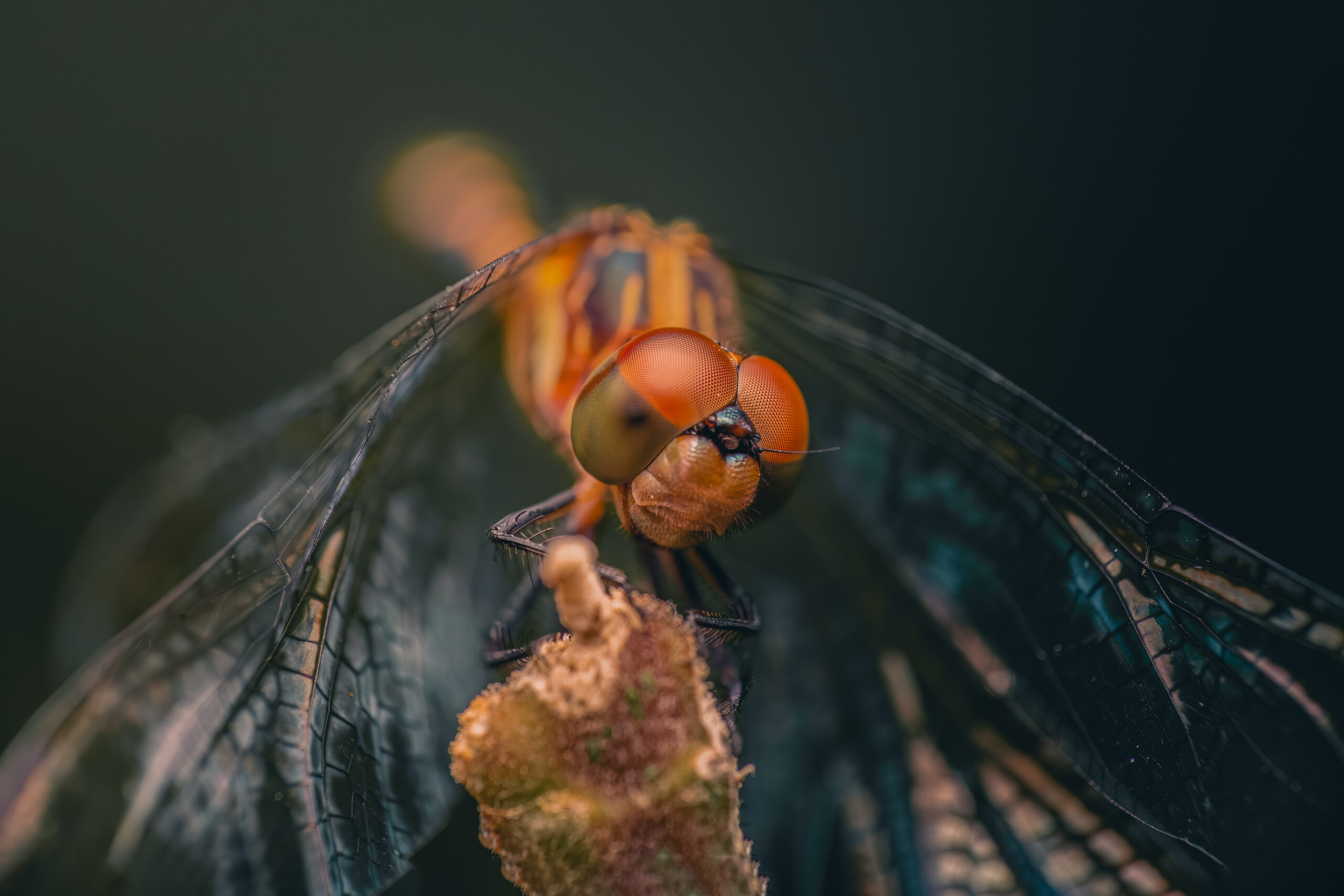
Even when I photograph a small creature for the purpose of showing something about its natural history, I am making choices. I decide where to stand, what to include in the frame, what to leave outside it, how much depth of field to use, how to shape the light, and which moment to preserve.
Those decisions are part of the story.
They tell us something about the subject, but they also tell us something about the person behind the camera.
This becomes particularly evident when photographing small creatures.
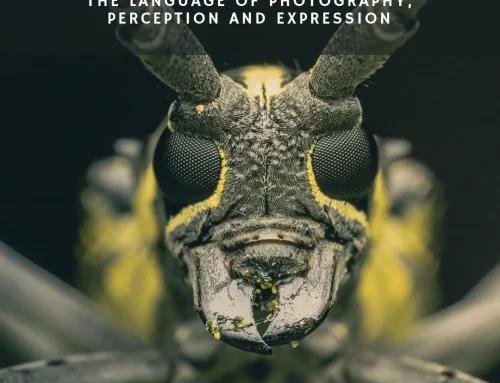
A macro photograph can make an insect look monumental. It can reveal structures invisible to the naked eye, transform a leaf into a landscape, or bring us close enough to a frog that we can see the texture of its skin.
But the image is still only a fragment.
The animal has a life beyond the photograph.
It was moving before I found it. It was responding to its surroundings. It may have been feeding, avoiding a predator, searching for a mate, communicating, or simply resting.
There is a whole story taking place outside the frame.
And sometimes, what happens outside the frame is precisely what makes the photograph meaningful to me.
This is one of the reasons I enjoy telling the stories behind my photographs.
The image tells one part of the story.
The words can tell another.
They can give context to what the photograph cannot show. They can tell us what happened before the shutter was pressed, what I noticed, what surprised me, what I felt, or what I understood only after the encounter was over.
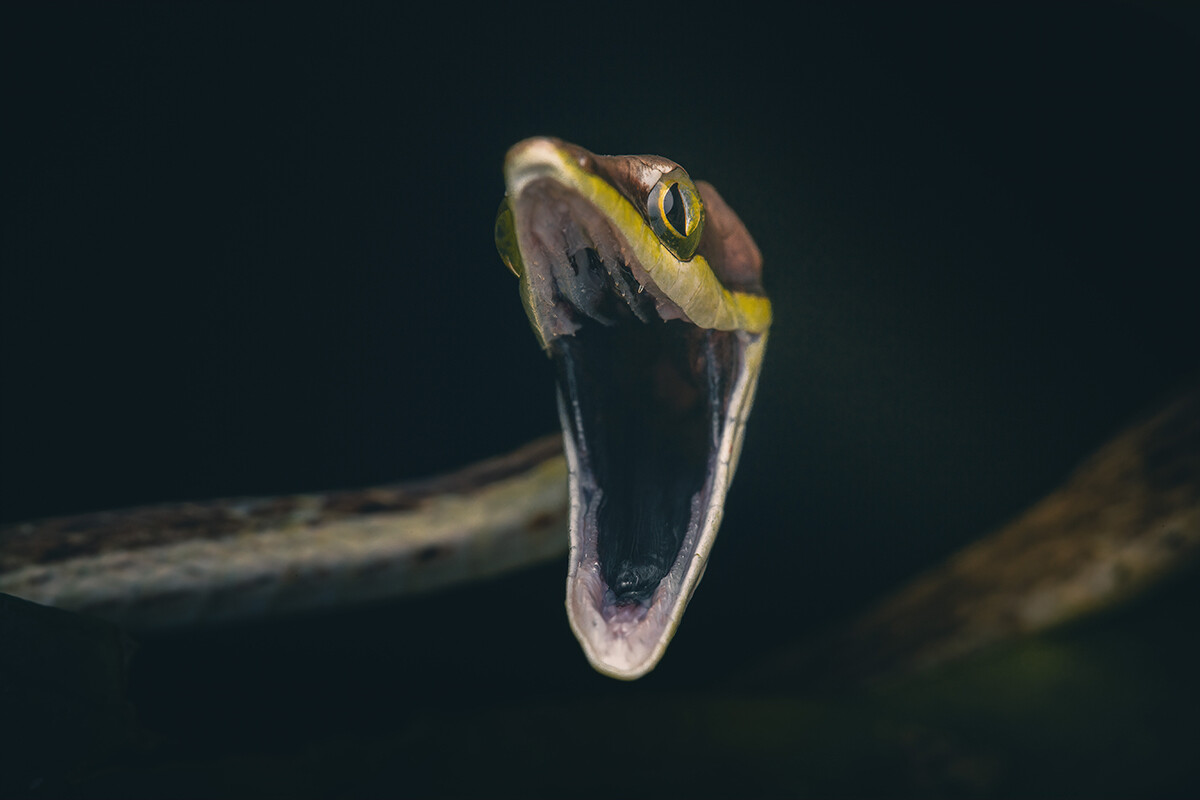
But even words cannot reconstruct the entire experience.
There will always be something missing.
And perhaps that is not a limitation we need to overcome.
Perhaps it is part of what makes photography so powerful.
A photograph is a fragment of reality, but it can also be a fragment of perception, memory, emotion, and intention.
It doesn’t have to reproduce everything that was there.
It can choose what matters.
It can make us feel something that the photographer felt, even if we never experience the original moment ourselves.
And maybe this is why I keep photographing.
Not simply to preserve what I saw, but to offer someone else a way into it.
A doorway.
A glimpse.
An invitation to look.
What lies beyond the edges of the photograph will always remain partly invisible.
But perhaps the best photographs don’t try to show us everything.
They make us want to see more.
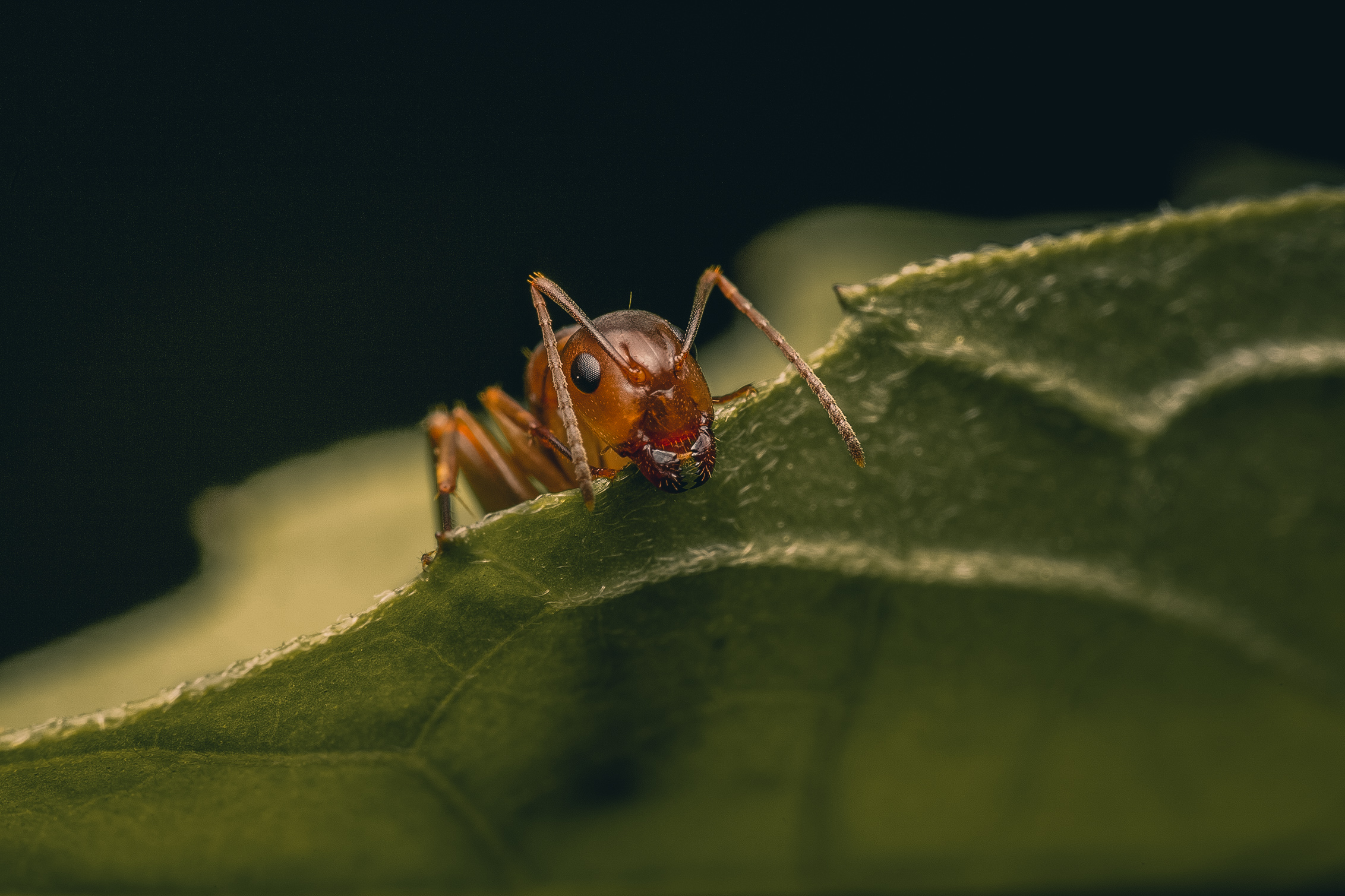

Coincido totalmente con tu comentario. Lo mío es básico, fotografío aves y algunos otros animales saliendo a bicicletear con mi cámara al cuello y me detengo cuando encuentro un motivo que me interese. Luego las publico en Facebook como Bicifotos. Y, generalmente pongo un comentario del momento y lugar donde realicé la toma. Además de identificar el pájaro motivo. He impreso unas 200 fotos para realizar varias exposiciones en las que cuento mas detalles de cada fotografía. Estoy intentando entrar en la macrofotografía. Veré que pasa.