There is something almost irresistible about a perfectly sharp macro photograph.
Every tiny hair is visible.
Every scale, texture and surface is rendered in incredible detail.
Nothing seems to escape the lens.
And when you discover focus stacking, it can feel like a revelation.
Suddenly, the limitations of macro photography seem to disappear. Instead of choosing which part of the subject will be sharp, you can photograph multiple planes of focus and combine them into a single image.
The result can be extraordinary.
But lately, I have been thinking about something else.
When did sharpness become the goal?
Somewhere along the way, it became very easy to believe that a successful macro photograph is one in which everything is in focus.
The eye is sharp.
The body is sharp.
The legs are sharp.
The hairs are sharp.
Every detail is there for us to inspect.
And technically, it can be an impressive photograph.
But sometimes I look at an image like that and find myself wondering:
What am I supposed to feel?
Because a photograph is not an inventory of details.
It is a composition.
It is light, space, color, shape, movement, atmosphere and intention.
And sometimes, what we choose not to show is just as important as what we show.
This is something macro photography has taught me over the years.
When you photograph a tiny creature, there is an almost endless amount of detail available to you.
A macro lens can reveal a world that the naked eye cannot normally see.
And that is part of the magic.
But seeing more does not necessarily mean saying more.
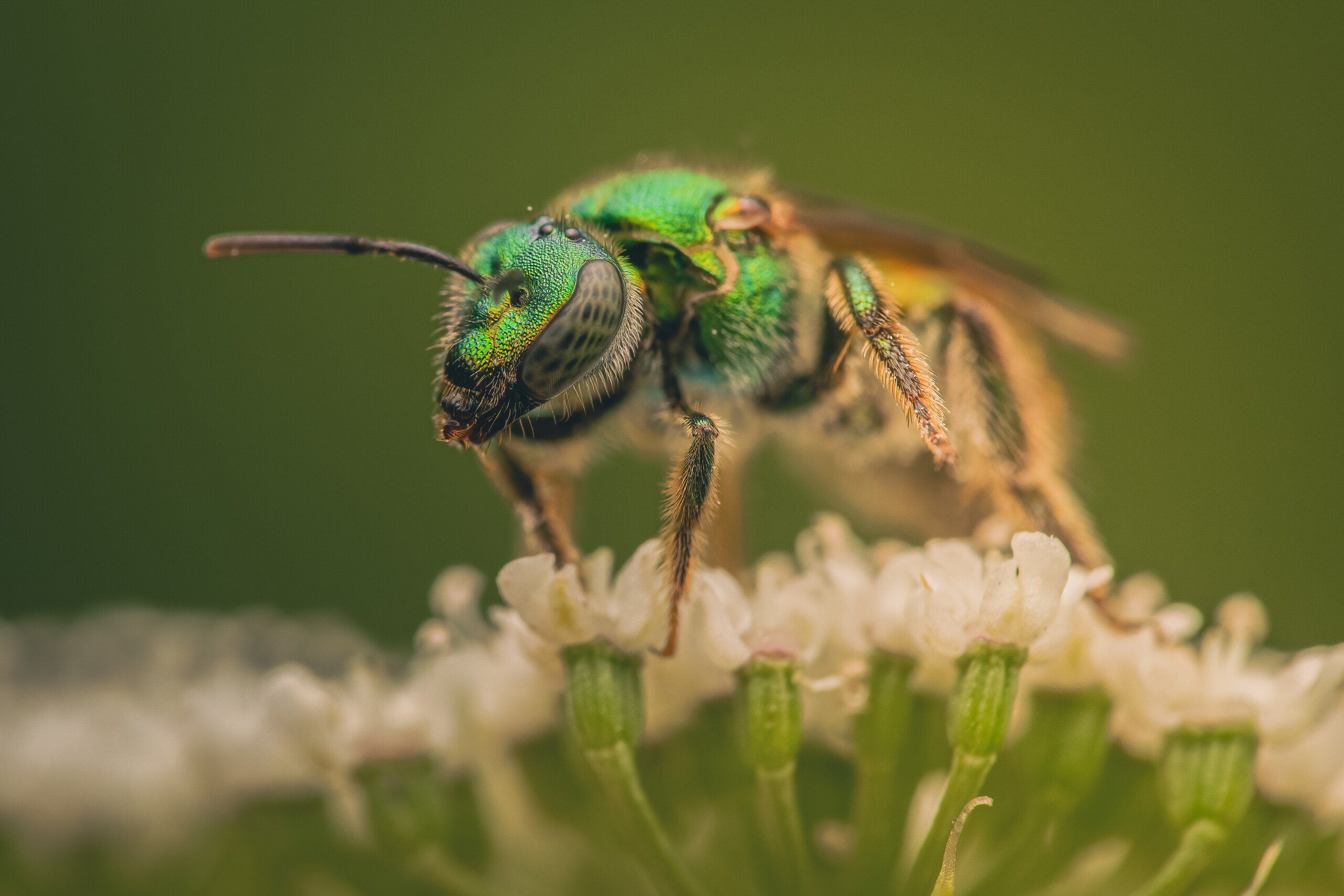
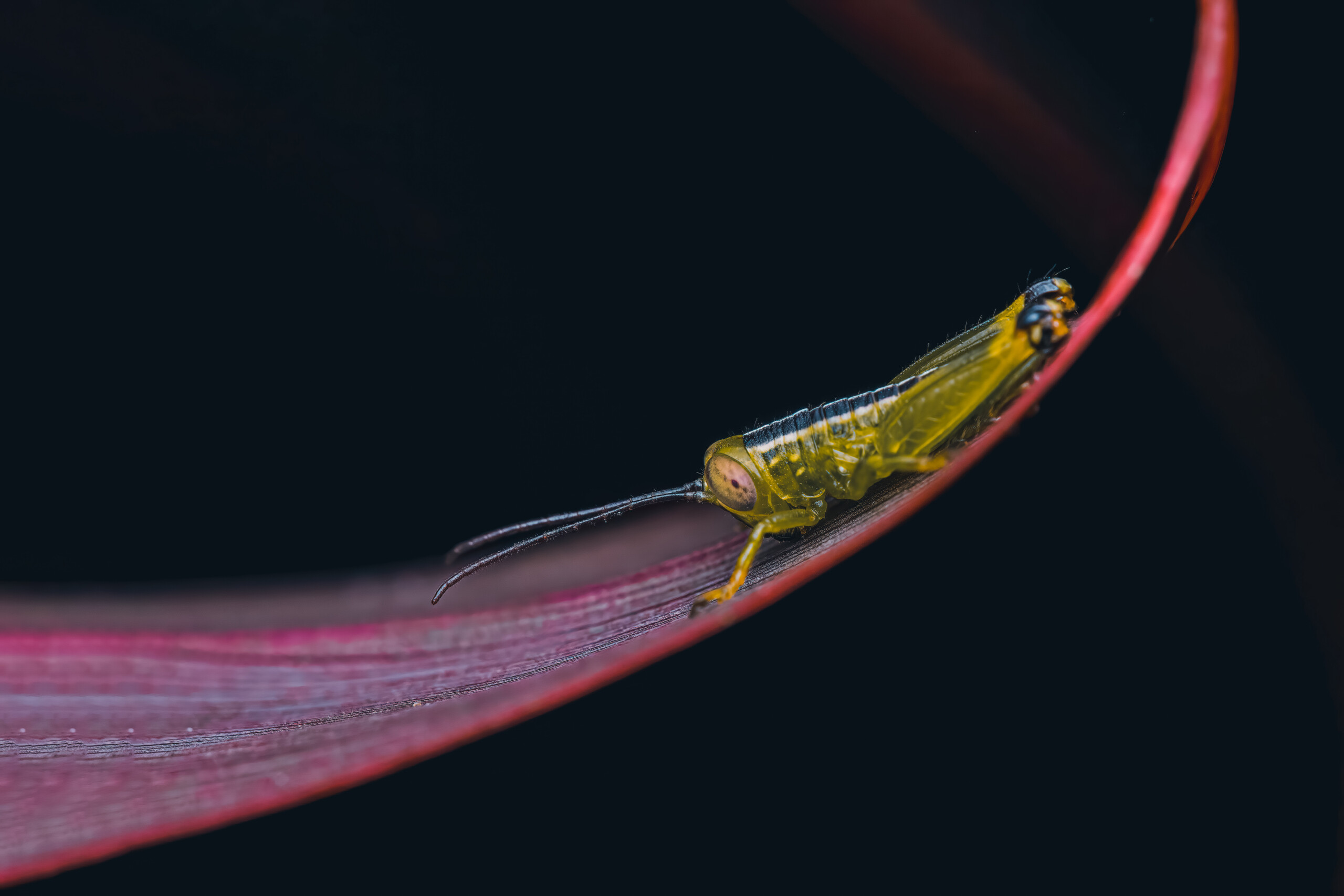
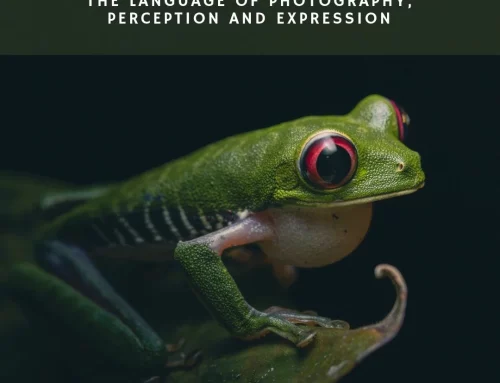
Sometimes the photograph becomes stronger when only part of the animal is sharp.
A single eye.
The curve of a body.
A pair of legs disappearing into the darkness.
A texture emerging from a soft background.
The rest can dissolve into blur.
And that blur is not a technical failure.
It can be part of the photograph’s language.
Depth of field can tell us where to look.
It can create distance.
It can create intimacy.
It can isolate a subject from its surroundings or make it feel as though it is emerging from them.
It can suggest mystery.
It can leave something to the imagination.
In other words, focus is not only a technical decision. It is a storytelling decision.
I think about this sometimes from the perspective of painting, too.
Even in a landscape photograph where it appears that everything is sharp, not everything is actually in the same plane of focus. The depth of field may be large, but there is still a particular plane where focus is at its sharpest.
As a painter, I learned that if I want something to feel farther away, I don’t necessarily have to draw less detail. I can soften its colors, reduce contrast, make them slightly grayer, and allow the forms to lose some definition.
Our brains use these changes to interpret depth.
So when everything in a photograph is rendered with exactly the same degree of sharpness and definition, something subtle can happen: we lose some of the visual cues that help us understand space.
This is something that sometimes strikes me when I see focus-stacked photographs of insects.
The face can be perfectly sharp from front to back, every tiny detail beautifully resolved, and then suddenly the rest of the body seems to disappear.
There is no gradual transition from sharpness into softness.
It can feel almost as if the body has been cut away from the face.
Everything is either completely resolved within the selected planes or abruptly outside them.
And that transition — that gradual movement from detail into blur — is something I find incredibly valuable.
It gives the photograph depth.
It tells my eye that the subject exists in space, rather than presenting every part of it as if it were occupying the same visual plane.
The same is true of composition.
When I find a tiny animal, my first instinct can be to get closer and show it in all its detail.
But sometimes the more interesting photograph is the one that gives the animal space.
Perhaps the creature occupies only a small part of the frame.
Perhaps the surrounding vegetation becomes part of the story.
Perhaps the darkness is as important as the subject itself.
Perhaps the photograph is not really about showing what the animal looks like.
Perhaps it is about showing what it felt like to find it there.
And this is where I think technique can quietly get in the way of what we are trying to communicate.
Not because technique is bad.
Quite the opposite.
We need technique.
We need to understand light, focus, depth of field, exposure and composition. We need to know what our equipment can do.
But technique is a means.
It is not the reason we make the photograph.
The danger comes when we start making photographs to demonstrate what our technique can achieve instead of using technique to communicate what caught our attention in the first place.
A technically perfect photograph can still say very little.
And an imperfect photograph can sometimes stay with us for years.
Perhaps because we don’t remember photographs for the amount of detail they contain.
We remember them for what they made us feel.
A sense of wonder.
Curiosity.
Tension.
Fragility.
Stillness.
Strangeness.
A feeling of being very close to something we would normally never notice.
This is especially important to me when photographing small creatures.
I don’t want people to look at my photographs and only think, Look at how sharp that insect is.
I want them to stop.
To wonder what they are looking at.
To notice something they might otherwise have walked past.
To feel the strangeness of discovering an entire world hidden at their feet.
Sometimes the best way to make that happen is not to show everything.
It is to choose.
Choose what to reveal.
Choose what to leave soft.
Choose where the eye should rest.
Choose how much space the subject needs.
Choose what belongs in the frame — and what doesn’t.
Because photography doesn’t begin with the question, How much detail can I capture?
It begins with a different question:
What do I want someone to see?
And perhaps even more importantly:
What do I want them to feel?
Sharpness, detail and technical precision will always have their place in photography.
But they are tools.
They should serve the photograph, not become the reason for making it.
Sometimes the detail is the story.
And sometimes the story is everything around it.

Excelente artículo Cynthia !! Tus reflexiones son super profundas. Y me encanta que pienses que una fotografía o una pintura son más que la técnica.
Bravo !
Tus reflexiones son muy claras, la vida nos enseña que siempre priorizamos algo en cada momento de decisión, aunque a veces uno quisiera resolver todo es un error no seleccionar lo prioritario cada vez que tenemos que resolver “algo”. Un abrazo!!